






The new Antiques novel by Barbara Allan (Barb and me) is out now! Brick-and-mortar stores may not have it (our publisher, Severn House, now affiliated with Joffe Books, is British) but Amazon does, in both hardcover and on Kindle.

Hardcover:


E-Book:
Here’s what reader Mary S. thinks about the new Trash ‘n’ Treasures mystery:
And Navy Mom says:
And our little micro-budget movie, Death by Fruitcake, is available at Amazon right now, regularly $22.29, but it’s been on sale a couple of times lately, so keep an eye out.
It’s free with commercials on Tubi, The Roku Channel, Fawesome and Xumo Play. Check here for more options: https://www.justwatch.com/us/movie/death-by-fruitcake.
If you hit one of the sale prices (it’s been as low as $6.66!), snag some for friends, relatives and to use for stocking stuffers.
Here’s a review that may convince you:
Five stars from reviewer zagain.
Solid Independent Film
Reviewed in the United States on February 24, 2026
“Death By Fruitcake is an adaptation of a novella by Barbara Allen from the Trash ‘n’ Treasures cozy mystery series. Allen is the pen name used by noted crime and mystery writer Max Allan Collins and his wife Barbara who co-write these adventures of antiques store owner Vivian Borne and her daughter Brandy. The film is set in small-town Serenity, Iowa and focuses on a community theater production of a Christmas play centered around local fruitcake production during the FDR administration. Vivian is directing the production and it stars local star Louise Lamont, who has recently returned to her hometown roots while on the downside of her successful career in soap operas and other stage shows. Things go awry when Lamont, a diva who has rubbed the rest of the cast and crew the wrong way, dies in the middle of a dress rehearsal. Vivian, who views herself as something of an amateur sleuth, takes it upon herself to assist local police chief Tony Cassato in solving the crime.
The film stars Paula Sands, a long-time news anchor and reporter in the Quad Cities area, as Vivian Borne and Alisabeth Von Presley, best known for her music career and as a former contestant on
American Idol, as her daughter Brandy. The film also features Rene Mauck, who portrayed Velda in the filmed stage radio-style production of Mickey Spillane’s Encore for Murder, as Louise; Rob Merritt (Richard Stone in Blue Christmas) as Chief Cassato; and Chris Causey (Jake Marley in Blue Christmas) as Paul, the theater’s lighting guru. While the cast may not contain a number of household names, there are some solid performances in the film. Sands does a solid job as Vivian, although some of her delivery certainly points to her past at a news desk. Von Presley, who had a minor role in Blue Christmas, stands out with an ability to easily speak to the camera in several scenes designed to break the fourth wall. Merritt, who was strong as the lead in Blue Christmas, puts in another solid performance as does Chris Causey, who has the presence of an experienced character actor (making it somewhat surprising that he’s not had more roles according to his IMDb profile). Kimberly Kurtenbach also stands out as Clara Buffet, head of Lamont’s fan club.The film is a low budget, independent production, but that works just fine given that this is a character-driven, quick (89 minutes) whodunit film that takes place entirely in one setting (the community theater). There are several funny spots and one-liners as well as an ending with a twist that is to be expected in these types of mystery stories. Although I’m unfamiliar with the book series this is based on, it’s safe to assume it is a fairly true adaptation given that it is written, directed and produced by Max Allan Collins and also produced by series co-writer Barbara Collins. Overall fans of the series, of cozy mysteries, or of Collins’ work in general are likely to find this film a worthy watch.
Here’s another FRUITCAKE review that just came to my attention:
RAVING REVIEW: One of the best types of mysteries doesn’t pretend to be bigger than it is. DEATH BY FRUITCAKE leans into its small-town setting, its contained stage environment, and its personality-driven storytelling without trying to inflate the stakes beyond what the story can support. That restraint ends up being one of its biggest advantages. It knows the scale it’s operating within and, instead of stretching, digs inward into character, tone, and timing.
The setup is simple in the best way. A dress rehearsal collapses into chaos when a notoriously difficult actress drops dead mid-performance, and suddenly everyone in the room becomes a suspect. That kind of confined, single-location mystery has been done countless times, but what makes this one click is the attention it pays to the personalities circling the event. This isn’t about elaborate plotting or intricate twists stacked on top of each other. It’s about letting the audience sit in a room full of people who all have a reason to hate the victim and watching the tension build from there.
Paula Sands carries much of the story as Vivian, and what stands out isn’t just her presence but the way the performance embraces a slightly heightened delivery without tipping into parody. There’s a stiffness to her line reading at times, but instead of breaking the illusion, it almost feeds into the character. Vivian feels like someone who sees herself as more composed and authoritative than she actually is, and that disconnect becomes part of the charm. It’s not polished conventionally, but it fits the world the film builds.
Alisabeth Von Presley brings a different kind of portrayal as Brandy, and the contrast between the two performances becomes one of the film’s strengths. Where Vivian leans toward control and presentation, Brandy feels more fluid, more aware of the absurdity around her. The moments where she interacts directly with the camera could have come off as distracting. They’re used sparingly enough that they add personality instead of pulling you out of the story. It gives the film an edge, a reminder that it’s in on its own tone without constantly pointing it out
.The supporting cast fills out the ensemble, keeping the suspect pool engaging. No one is pushed into satire, but everyone is just exaggerated enough to feel distinct. That balance is important in a story like this. If the characters blend into one another, the mystery loses its shape. Here, each interaction carries just enough tension or humor to keep things moving, even when the narrative slows.
The investigation expands in a way that feels intentionally relaxed, but there are stretches where it could have used a sharper sense of escalation. Conversations feel a bit repetitive at times, suspicions shift without always adding new information, and the momentum dips as a result. It never stalls completely, but there’s a version of this that trims some of that repetition and lands with a bit more impact.
There’s a lightness to the humor that doesn’t undercut the mystery, and a sense of familiarity that works in its favor rather than against it. It feels like a story that understands its audience, especially those drawn to mysteries where the intrigue matters but the experience is just as much about spending time with the characters. The jokes land more often than not, and when they don’t, they still feel in line with the world the film has created.
The single-location setting becomes a strength rather than a constraint, forcing the film to rely on blocking, performance, and dialogue rather than on visuals. There’s a stage-like quality to everything, which makes sense given the setting, and instead of fighting that, the film leans into it.
What ultimately holds everything together is the film’s understanding of what kind of mystery it wants to be. It’s not chasing complexity for its own sake, and it’s not trying to reinvent the genre. Instead, it focuses on delivering a contained, character-driven story with enough intrigue to keep you guessing and enough personality to keep you invested.
There’s also an underlying appreciation for the setting itself. The small-town dynamics, the overlapping relationships, the way grudges and histories linger just beneath the surface, all of that feeds into the mystery without needing to be spelled out. It gives the film a sense of place that adds texture without complicating the narrative.
DEATH BY FRUITCAKE doesn’t aim for perfection. Its appeal comes from how comfortably it settles into its identity. The imperfections are part of the experience, but they don’t define it. What sticks is the chemistry between its leads, the playful tone, and the steady commitment to telling a story that fits its scale. It’s the kind of film that understands exactly what it’s offering, and more importantly, what it isn’t. And in a genre that often overreaches or overcomplicates itself, that clarity goes a long way.
This same reviewer also likes Return of the Maltese Falcon:
5 out of 5 stars
Excellent Followup
Reviewed in the United States on April 4, 2026
Format: Hardcover
Dashiell Hammett’s The Maltese Falcon from 1930 is a whirlwind of a hardboiled novel in which you are thrown right into the story. There’s no long preamble introducing characters or settings — characters quickly enter the scene and the action starts immediately. It can be almost disorienting at first with how quickly things begin happening and with characters coming into and going out of the plot. The overall story is well-known to most thanks to John Huston’s film noir classic starring Humphrey Bogart, and the ending to the tale is perfect given how frenetic the rest of the story was executed.
BUT…. it’s hard not to wonder what happens next with Sam Spade and the motley crew of would-be crooks.
And Max Allan Collins provides a solution for that nagging question with his
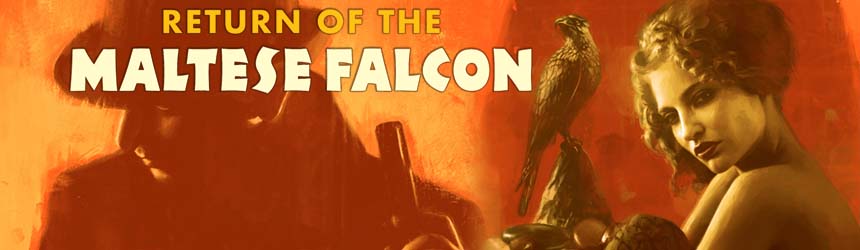
Return of the Maltese Falcon follow-up. Much like the original, Collins wastes no time with a long setup as the story begins immediately and characters, both new and old, quickly make their way into the plot. Like the original, the Return features several twists and turns; a cast of characters who may or may not be who they claim; fisticuffs; sarcastic quips from Spade; and a bird statue that’s caught the attention of many.Collins is no stranger to working with characters created by others and finishing tales began by other classic authors — he was handpicked by Mickey Spillane to complete all of his unfinished works; authored the Dick Tracy comic strip for a number of years; wrote the Batman comic; and even provided novels for the popular CSI television series. And not surprisingly, he does a fantastic job with Hammett’s classic PI Sam Spade in this follow-up.
Overall this is an excellent read that holds up to the quality of the original.
This may have appeared here before, but if you haven’t read it – particularly if you haven’t read my Return of the Maltese Falcon – this might encourage you to do so.
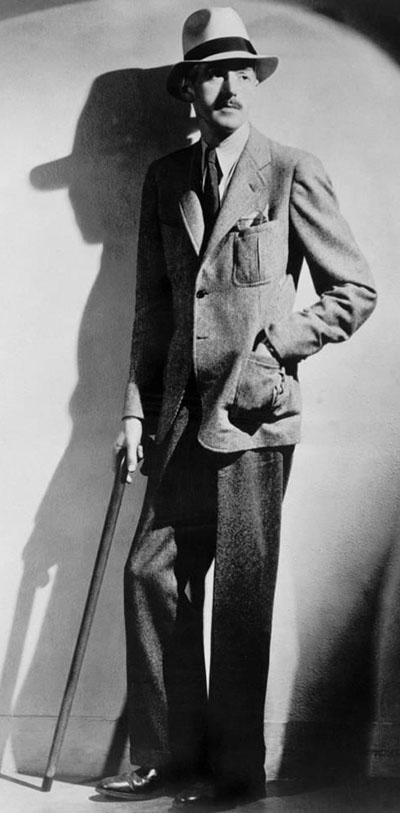
The Maltese Falcon is both a seminal novel (1929) in the private eye genre and one of the most classic movies ever made. The 1941 film, which were are all intimately familiar with (or should be), starred Humphrey Bogart in an immortal role as well as Mary Astor, Gladys George, Peter Lorre, and Sydney Greenstreet. It is amazing that Sam Spade (the private eye character) only appeared in one Hammett novel (The Maltese Falcon) and a handful of short stories. The character, perhaps propelled by the silver screen success of John Huston’s version, has assumed proportions which are larger than life. Spade is perhaps more well known as a private eye than almost any other literary figure other than Sherlock Holmes, who was a product of a different era.
Collins’ Return of the Maltese Falcon is a pastiche, that is, according to the American Heritage Dictionary, “[a] dramatic, literary, or musical piece openly imitating the previous works of other artists, often with satirical intent.” Collins tells us readers in an afterward that he based his novel solely on the original 1929 work and ignored the movies and other pastiches. He does admit though that he is, in doing this, like “a buzzard picking at the Falcon’s bones.”
(NOTE FROM MAC: I do not consider Return of the Maltese Falcon a pastiche because it is utterly devoid of satirical intent. My quoted “buzzard” remark, however, is.)
Effie Perine, his secretary, plays a strong role in this novel, with semi-romantic sparring between them. The story quickly switches to the Falcon as Rhea Gutman, the daughter of Casper Gutman, the infamous seeker of all things Falcon, approaches Spade and hires him to find the Falcon, once again, but this time the real one. She explains that her only inheritance is her father’s quest for that golden bejeweled bird.
What follows is a sort of trip down memory lane with Spade visiting both Brigid and Joel Cairo, soliciting their help. Along the way, Spade is hired by more than one person in their quest for the Falcon with him quietly pocketing retainers left and right, hoping that it will all sort itself out in the end. Brigid continues her femme fatale role as a “supplely shapely female” with “nearly violet eyes, half-lidded and languid under long lovely lashes.” She is still a siren’s song even in jail.
Spade, a former Continental Operative, but not Hammet’s famous unnamed Continental Op, admits that he has not been known to play things by any one’s rules but his own, and states that the assumption that he is “outright crooked misses the point.” He says he is in the detective trade and his partner was murdered so he had to do something about it. San Francisco has no shortage of suckers, he explains, and never think that he is one of them.
Return of the Maltese Falcon is not the original The Maltese Falcon, but perhaps it is the next best thing. It offers us another chapter in that chase for the elusive treasure and the collection of odd ducks who are after it. It revisits familiar characters and breathes new life into them. And it is just plain fun to read.
The HBO/Cinemax Quarry series is on a list of underrated TV crime dramas.
On Tuesday (I am writing this on Sunday) I will be recording a Blu-ray commentary with moderator Heath Holland and Jeffrey Goodman, the director of The Last Lullaby (2008). That’s the Quarry movie starring Tom Sizemore based on my short story, “A Matter of Principal,” and my script for the film, which I turned into the novel The Last Quarry. Before filming, a second writer did a pass on the script, after my two drafts; and I did a punch-up of sorts after that.
Quarry is called “Price” in the film because I didn’t want to tie the character up for subsequent films.
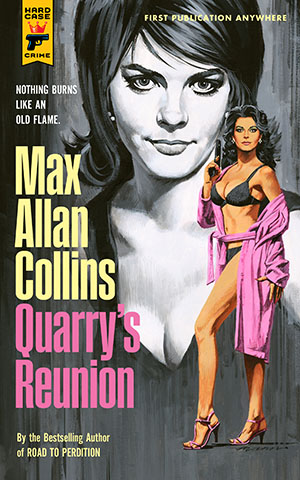
Kino Lorber is bringing it out on Blu-ray, much to my delight (I like the film), in conjunction with Quarry’s 50th anniversary (the first novel appeared in 1976, The Broker now called Quarry, my preferred title). Release date of the Blu-ray TBA.
I am hopeful the short Quarry film will be included on the special features of the Blu-ray. Fingers crossed.
M.A.C.